Metal 3D Printing
Metal 3D Printing
SLM/LPBF metal 3D printing, materials, design review, CNC finishing and inspection, from samples to batch production.
Specifications
- A — Process Selection
- We operate 24 metal 3D printers. Covers SLM / LPBF, binder jetting and DED / LENS, prototype to batch. SLM / LPBF preferred; JR recommends after a design review. We work closely with HaiTian.
- SLM / LPBF — Suitable Parts
- For complex, internal-channel parts: one-piece lightweight parts, lattice and TPMS structures, conformal channels, topology-optimised brackets, AI server cold plates.
- SLM / LPBF — Why Choose It
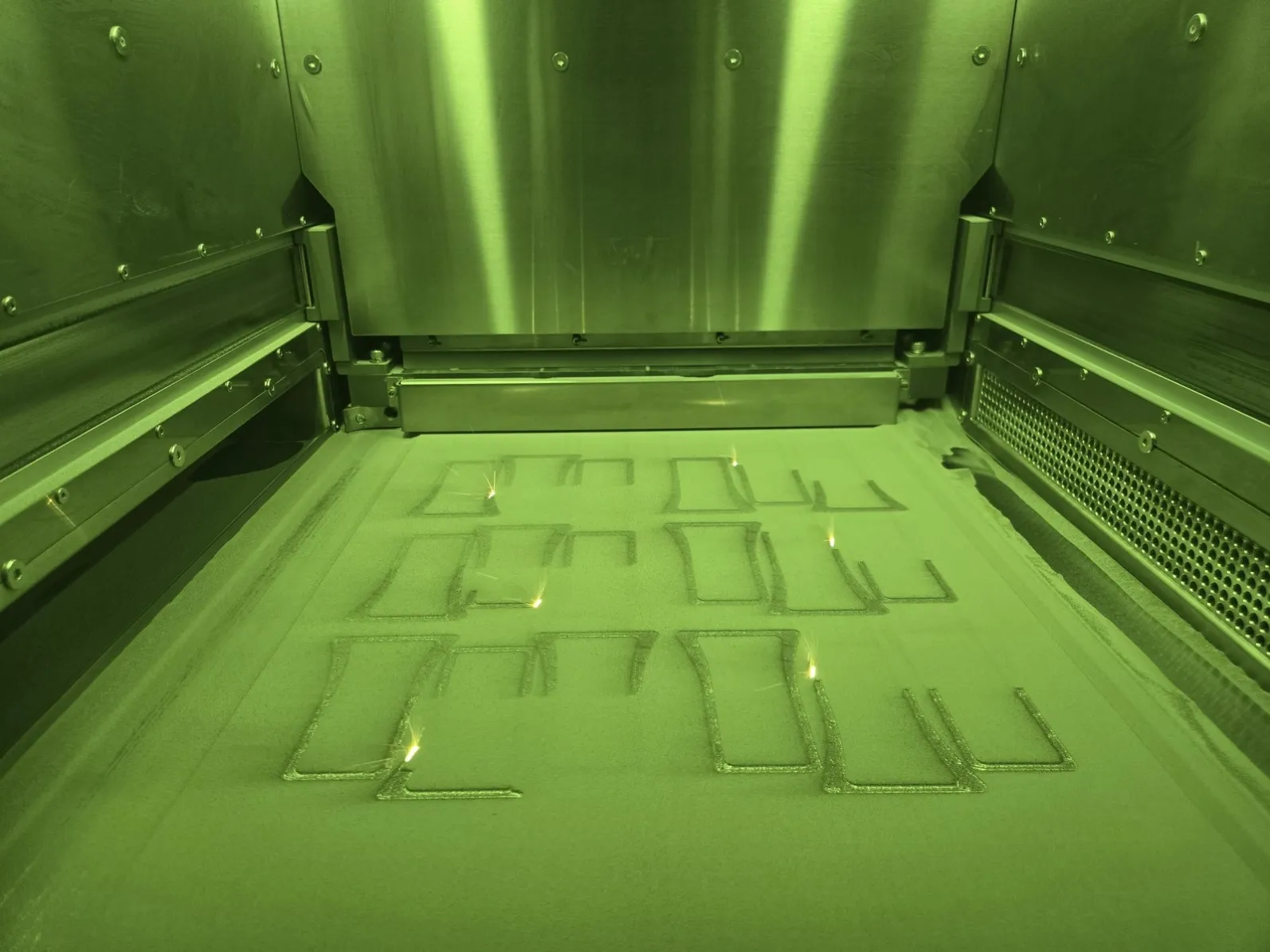
- Laser melts metal powder layer by layer, giving high design freedom for internal structures and integrated designs machining cannot make; CNC finishes dimensions and sealing surfaces.
- SLM / LPBF — Limits to Evaluate
- Evaluated part by part: overhangs, thin walls, supports, internal powder removal, as-printed surface and deviation, and size vs. the formable range; oversize parts are split or made another way.
- Metal Binder Jetting — Suitable Parts
- For complex-shaped, small- to medium-sized metal parts in larger quantities, with potential for batch production; parts must accept debinding and sintering.
- Metal Binder Jetting — Why Choose It
- No layer-by-layer laser melting is needed, and the forming efficiency suits batch production; complex shapes are formed in one piece and become metal parts after sintering.
- Metal Binder Jetting — Limits to Evaluate
- Debinding and sintering mean shrinkage and dimensional control must be evaluated; accuracy and surface differ from powder-bed fusion, and thin walls, fine features and critical dimensions need review.
- DED / LENS — Suitable Parts
- Suitable for repair, cladding, large structures and parts for specific applications, and for additive manufacturing on existing parts.
- DED / LENS — Why Choose It
- Directed energy deposition can form or repair directly on a substrate, suiting large parts and local additive manufacturing, with flexibility for repair scenarios.
- DED / LENS — Limits to Evaluate
- Accuracy, surface and material performance differ from powder-bed fusion; forming usually needs more CNC allowance and post-processing; suitability is evaluated part by part.
- B — SLM Capability: Materials That Can Be Evaluated
- Evaluable grades: AlSi10Mg, 316L, Ti6Al4V, IN718, IN625, 17-4PH, MS1/1.2709, H13, CX, copper (SLM). Engineering must confirm suitability.
- B — SLM Capability: Thin Walls and Overhangs
- Reviewed one by one by material, structure, build orientation and process parameters; thin-wall and overhang features need supports or a design change. No general limit values are promised.
- B — SLM Capability: Internal Channels and Powder Removal
- Key check: can powder be removed? Confirm routing, outlets and removal path. We review powder-removal access and agree on a verification method for critical internal channels before production.
- B — SLM Capability: As-Printed and Machined States
- As-printed surfaces are relatively rough, deviation wide; critical dimensions, mating and sealing surfaces need CNC finishing, not guaranteed as-printed. Delivery state: as-printed or machined.
- B — SLM Capability: Prototype Stage
- Prototypes verify formability, internal-channel powder clearance, assembly and interface fit, and dimensions and sealing after machining; conclusions confirm the plan before batch production.
- C — Materials
- SLM / LPBF: AlSi10Mg, 316L, Ti6Al4V, IN718, IN625, 17-4PH, MS1/1.2709, H13, CX, copper. Metal Binder Jetting: BJ 316L. Tell us which material or inspection documents your project requires.
- D — Design Review
- DfAM: overhangs/supports, thin walls, orientation, powder removal, machining allowance, inspection. Send 3D model, material grade, quantity, surface/fit requirements. Team: 10+ years each.
- E — Post-Processing and Inspection
- Powder/support removal, heat treatment, CNC finishing, blasting/polishing; binder-jetted parts need debinding/sintering. Inspection: pressure/leak tests, CMM, optical inspection; reports on request.
- F — Request a Quote
- Please send your 3D model, material grade, quantity, and surface and fit requirements; JR will recommend a process after a design review and reply.
SLM / LPBF (Selective Laser Melting) is JR's preferred process for metal 3D printing: a laser melts metal powder layer by layer to form complex metal parts directly. The points below follow the questions engineers ask most often; every conclusion is subject to a design review of the specific part.
Request a Quote: please send your 3D model, material grade, quantity, and surface and fit requirements. Please email STEP files and 2D drawings to sales@metalprintingservices.com.